
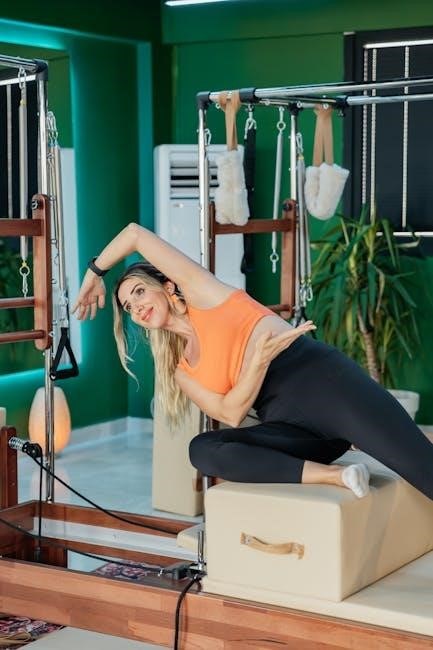
Pilates Workout Plan PDF: A Comprehensive Guide
Pilates is gaining popularity, offering a holistic approach to fitness. Numerous PDF resources provide structured workout plans, catering to all levels – from beginner routines to advanced exercises.
These PDF guides often include detailed exercise instructions, modifications, and progressions, making Pilates accessible for home practice and personalized fitness journeys.
What is Pilates?
Pilates, developed by Joseph Pilates, is a low-impact exercise system emphasizing core strength, flexibility, and body awareness. It’s a method focusing on precise movements, controlled breathing, and mindful engagement of muscles, differing significantly from high-impact workouts. Unlike routines solely focused on calorie burning, Pilates aims to build a strong core – often called the ‘powerhouse’ – which supports the spine and improves posture.
Many individuals seek Pilates workout plans in PDF format for convenient access to structured routines. These PDF guides often detail foundational principles, explaining how to properly execute exercises and modify them based on individual fitness levels. Pilates isn’t just about physical strength; it’s a mind-body practice promoting coordination, balance, and a deeper connection to one’s physical self. It’s a versatile method adaptable for various needs, including rehabilitation and athletic conditioning, making readily available PDF resources incredibly valuable.
The Core Principles of Pilates
Several core principles underpin effective Pilates practice, often detailed within Pilates workout plan PDF guides. Concentration is paramount, demanding focused attention on each movement. Control ensures exercises are performed with precision, avoiding momentum and maximizing muscle engagement. Centering emphasizes initiating movement from the ‘powerhouse’ – the core muscles – providing stability and support.
Precision is vital, focusing on correct form over repetitions; Breath is integral, coordinating with movements to enhance efficiency and promote relaxation. Flow creates a seamless sequence of exercises, maintaining continuous movement. These principles, frequently highlighted in PDF resources, aren’t merely guidelines; they are foundational to experiencing the full benefits of Pilates.
Understanding and applying these principles, as outlined in a well-structured Pilates workout plan PDF, is crucial for safe and effective practice, regardless of experience level.
Benefits of a Pilates Workout Plan
Following a structured Pilates workout plan, often found as a downloadable PDF, offers a multitude of benefits. Improved core strength is a cornerstone, enhancing stability and supporting the spine. Increased flexibility and muscle tone contribute to a more streamlined physique and improved range of motion.
Pilates promotes better posture by strengthening postural muscles and increasing body awareness. Many PDF guides specifically address back pain, offering exercises to alleviate discomfort and prevent future issues. Furthermore, Pilates can enhance balance and coordination, reducing the risk of injuries.
A Pilates workout plan PDF provides a convenient and accessible way to integrate these benefits into your routine, offering a low-impact, yet highly effective, path to overall wellness and physical improvement.
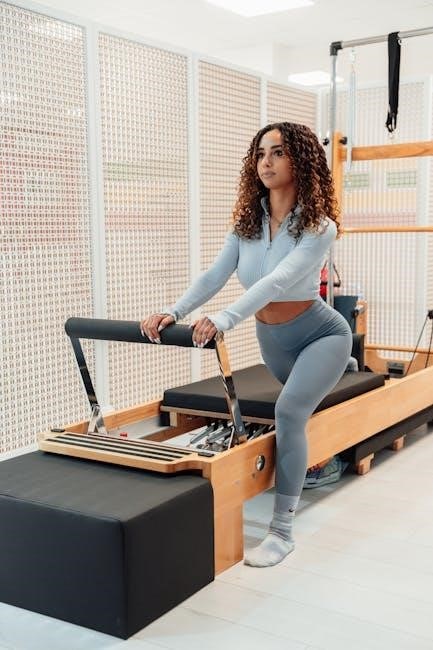
Beginner Pilates Workout Plan (PDF Focus)
Pilates beginners can easily find free PDF workout plans online. These resources offer foundational exercises, focusing on proper form and controlled movements for a safe start.
Finding a Free Beginner Pilates PDF
Locating a suitable beginner Pilates PDF is surprisingly straightforward in today’s digital landscape. A quick online search using keywords like “free beginner Pilates PDF,” “Pilates mat workout PDF,” or “Pilates for beginners printable” will yield a wealth of options. Several fitness websites and blogs specialize in offering downloadable workout routines, often categorized by skill level;
YouTube channels dedicated to Pilates frequently provide links to accompanying PDF guides in their video descriptions. These PDFs often detail the exercises demonstrated, offering visual cues and written instructions for clarity. Platforms like Pinterest are also excellent resources, with numerous pins linking to free Pilates PDFs hosted on various websites.
However, it’s crucial to exercise caution when downloading PDFs from unfamiliar sources. Prioritize reputable websites and instructors to ensure the information is accurate and safe. Look for PDFs created by certified Pilates instructors or organizations. Always review the exercises before starting to ensure they align with your fitness level and any existing health conditions. Remember to listen to your body and modify exercises as needed.
Essential Equipment for Beginner Pilates
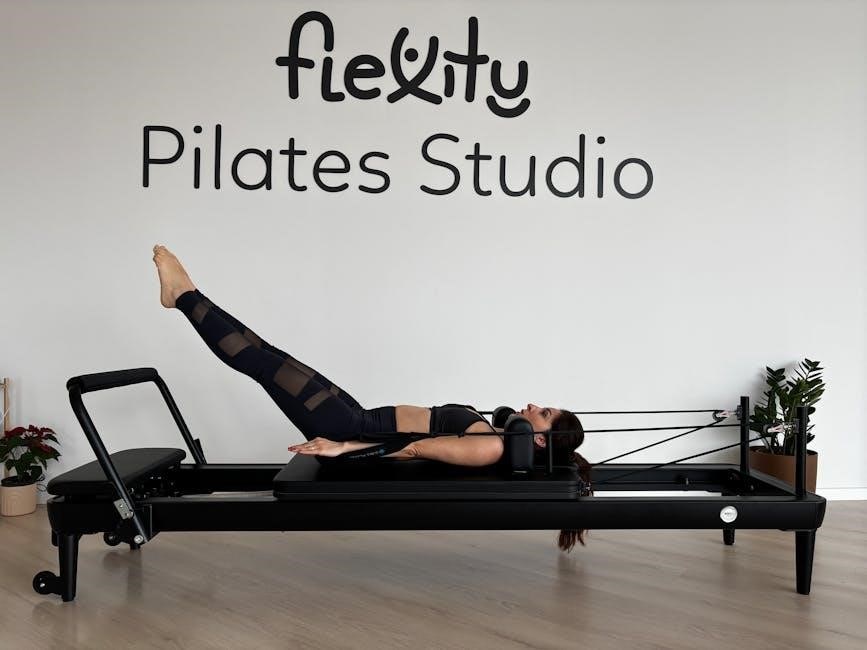
Fortunately, beginning a Pilates journey doesn’t require a significant investment in equipment. Many effective beginner Pilates workouts can be performed using just a mat for cushioning and comfort. This makes it incredibly accessible for home practice, aligning perfectly with downloadable PDF workout plans.
As you progress, however, incorporating a few key pieces of equipment can enhance your workouts and add variety. A Pilates resistance band is a versatile and affordable option, providing added challenge and assisting with proper form. A Pilates ring (or magic circle) can also be beneficial for targeting specific muscle groups and increasing intensity.
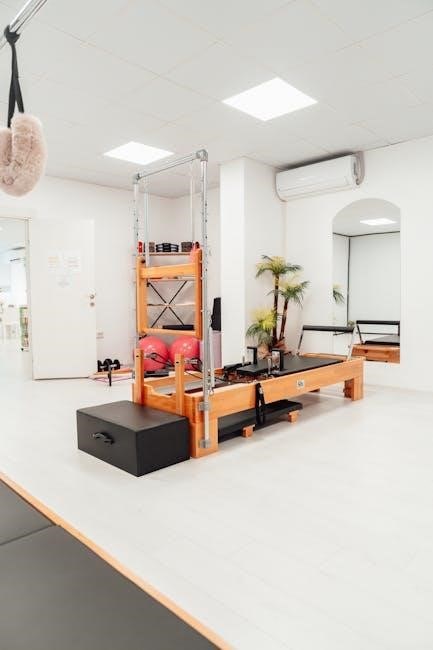
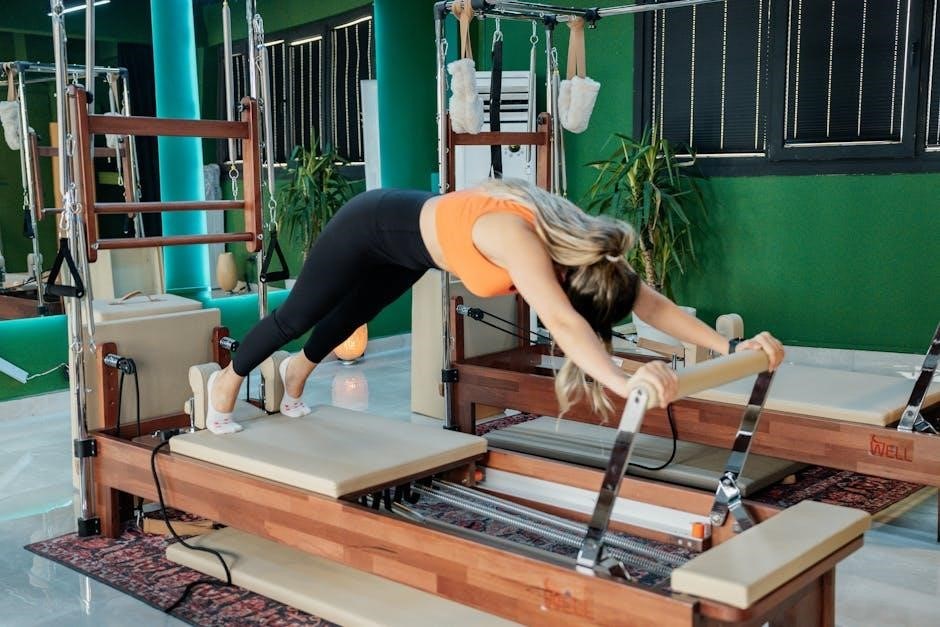
More advanced equipment, like a Reformer or Cadillac, isn’t necessary for beginners and is typically found in Pilates studios. Focusing on mastering the foundational exercises with a mat and potentially a resistance band or ring is an excellent starting point. Many PDF guides will indicate if specific props are needed for certain exercises, allowing you to gradually build your equipment collection as your practice evolves.
Warm-up Exercises for Pilates Beginners
Prior to diving into a Pilates workout, especially when following a PDF plan, a proper warm-up is crucial. This prepares your muscles for the controlled movements and helps prevent injuries. A good warm-up increases blood flow and range of motion, enhancing the effectiveness of your session.
Begin with gentle movements like pelvic tilts – lying on your back with knees bent, gently rocking your pelvis forward and backward. Follow this with knee folds, bringing one knee at a time towards your chest. Arm circles, both forward and backward, are also beneficial for warming up the upper body.
Include spinal twists while seated or lying down to improve spinal mobility. Cat-cow stretches, performed on your hands and knees, are excellent for warming up the spine and core. Many beginner Pilates PDF guides will incorporate these warm-up exercises directly into the routine, ensuring a safe and effective start to your workout.
Intermediate Pilates Workout Plan
Intermediate Pilates, often found in PDF formats, builds upon foundational exercises. These plans challenge core strength and control, demanding precise movements and increased repetitions.
Expect more complex sequences and a focus on deeper muscle engagement for a progressive workout.
Progressing from Beginner to Intermediate
Transitioning from a beginner Pilates routine to an intermediate level requires a thoughtful approach, often guided by PDF workout plans designed for progression. The key isn’t simply attempting harder exercises, but mastering the fundamental principles first – core engagement, precise movements, breath control, and proper alignment.
Before advancing, ensure you can comfortably and correctly perform all beginner exercises with good form. This includes consistently activating your deep core muscles throughout each movement. Look for PDF resources that specifically outline progression criteria.
Intermediate Pilates PDFs typically introduce exercises with increased complexity, such as adding resistance (using bands or rings), increasing repetitions, or modifying exercises to challenge stability. They may also incorporate more dynamic movements and transitions between exercises. Pay attention to your body and don’t rush the process; listen to signals of fatigue or discomfort. A well-structured PDF plan will offer modifications for those needing them.
Intermediate Pilates Exercises (PDF Examples)
Many Pilates PDF resources offer a diverse range of intermediate exercises. Common examples include the Teaser, requiring significant core strength and control, and variations of the Roll Up, challenging spinal articulation. The Swimming exercise, often found in intermediate PDFs, builds back strength and coordination.
Side Kicks series, with variations adding resistance bands, are excellent for hip and core stability. Spine Stretch Forward, performed with precise spinal curvature, enhances flexibility. Intermediate PDFs frequently introduce exercises on the Cadillac or Reformer, if accessible, but mat-based options are plentiful.
Look for PDFs that provide clear visual demonstrations (photos or videos) and detailed instructions for each exercise; Pay attention to cues regarding breathing, alignment, and modifications. Remember to prioritize form over quantity; mastering the technique is crucial before increasing repetitions or adding resistance. A good PDF will emphasize proper execution.
Focus on Core Engagement in Intermediate Pilates
Intermediate Pilates, as detailed in many PDF workout plans, significantly intensifies the demand for core engagement. It’s not simply about “tightening” abdominal muscles, but activating the deep core stabilizers – the transversus abdominis, pelvic floor, and multifidus. PDF guides should emphasize drawing the navel towards the spine and maintaining a neutral spine throughout each exercise.
Exercises like the Corkscrew and advanced Roll Ups require constant core control to prevent lower back strain. Intermediate Pilates PDFs often highlight the importance of initiating movement from the core, rather than relying on momentum. Proper breathing techniques, coordinating with movement, are also crucial for maximizing core activation.
Focus on maintaining a stable pelvis and spine as you move through exercises. A quality PDF will provide cues to help you find and maintain this stability, ensuring you’re truly working your core and reaping the full benefits of Pilates.
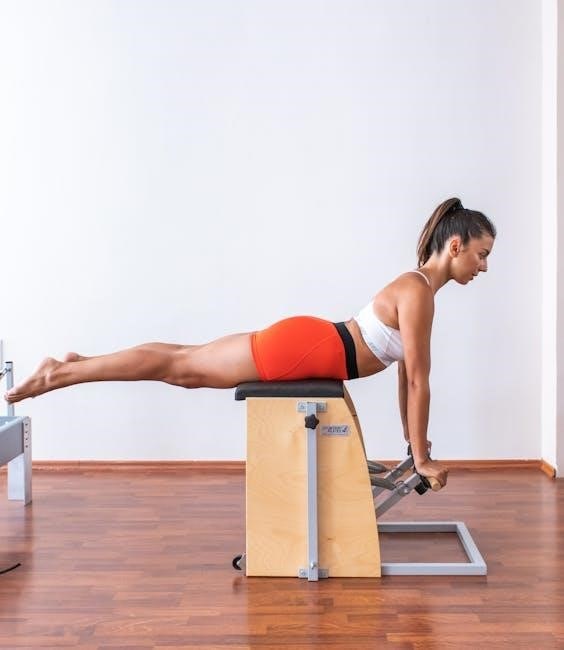
Advanced Pilates Workout Plan
Advanced Pilates PDF plans challenge strength and flexibility with complex exercises. They often incorporate props like resistance bands and rings for increased intensity and varied routines.
Building Strength and Flexibility
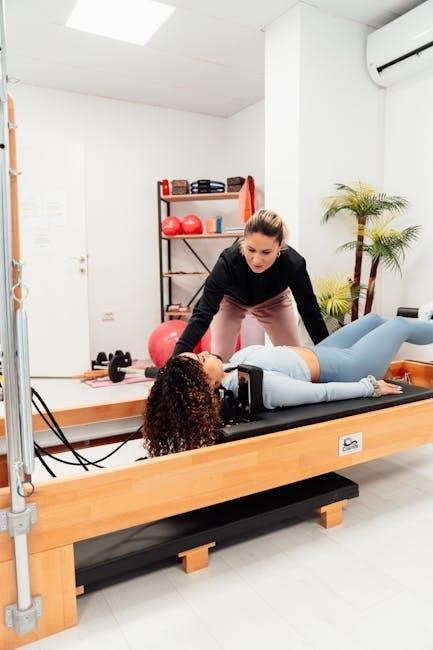
Advanced Pilates, often detailed in comprehensive PDF workout plans, prioritizes building both strength and flexibility simultaneously. Unlike isolated strength training, Pilates focuses on controlled movements that engage multiple muscle groups, fostering functional strength. These PDF resources typically progress beyond foundational exercises, introducing challenging variations that demand greater core stability and muscular endurance.
Flexibility is enhanced through dynamic stretching integrated within the routines, improving range of motion and preventing injuries. PDF guides often illustrate proper form and alignment, crucial for maximizing benefits and minimizing risk. Expect exercises that target deep core muscles, alongside movements that lengthen and strengthen limbs. The goal isn’t just about achieving physical prowess, but cultivating a balanced, resilient body capable of efficient movement. Utilizing Pilates principles, these PDF plans help refine posture and improve overall body awareness, leading to long-term physical well-being.
Advanced Pilates Exercises (PDF Resources)
Numerous PDF resources offer a wealth of advanced Pilates exercises for those seeking a challenging workout. These plans often include variations of classic moves like the Roll Up, Teaser, and Swan Dive, demanding significant core strength and control. Expect to encounter exercises performed on the Pilates Reformer, Cadillac, or Chair, detailed with precise instructions and modifications within the PDF guides.
Advanced routines frequently incorporate props like resistance bands and Pilates rings to intensify the workout and target specific muscle groups. PDFs may also feature flowing sequences that combine multiple exercises, building stamina and coordination. Finding reliable sources is key; look for plans created by certified Pilates instructors. These resources emphasize proper form to prevent injury and maximize effectiveness. Remember to progress gradually, mastering each exercise before moving on to more complex variations, as outlined in the PDF’s progression guidelines.
Incorporating Pilates Props (Resistance Bands, Pilates Ring)
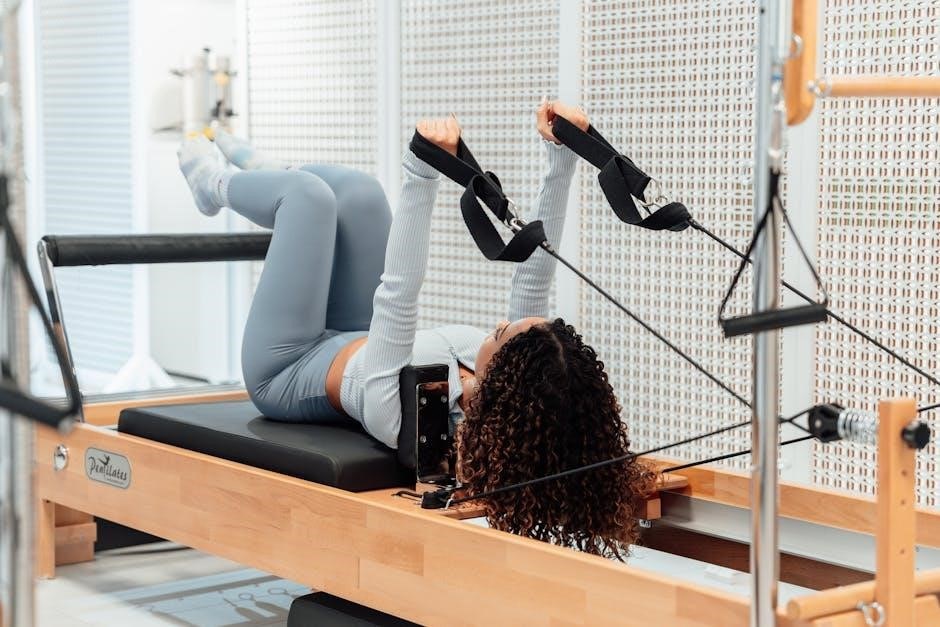
Pilates prop integration, detailed in many PDF workout plans, significantly enhances exercise intensity and versatility. Resistance bands add challenge to leg lifts, arm work, and core exercises, increasing muscle engagement and promoting strength gains. Pilates rings, often featured in downloadable PDFs, provide targeted resistance for inner thigh work, chest presses, and bicep curls, improving muscle tone and definition.
These props allow for modifications, making exercises accessible to various fitness levels. PDF guides often illustrate proper band placement and ring grip techniques. Advanced users can explore more challenging variations, increasing resistance or combining props. Utilizing props elevates the Pilates experience, offering a dynamic and effective workout. Many PDF resources provide specific routines designed around prop usage, ensuring a well-rounded and progressive Pilates practice. Remember to prioritize controlled movements and proper form when using props.
Pilates for Specific Needs
Pilates, adaptable through PDF guides, addresses unique needs. Specialized PDF plans target back pain, posture, and pregnancy, offering modified exercises for safe and effective results.
Pilates for Back Pain
Pilates offers a gentle yet effective approach to alleviating and preventing back pain, and numerous PDF workout plans are specifically designed for this purpose. These plans focus on strengthening core muscles – the abdominal, back, and pelvic floor – which act as a natural corset, supporting the spine and reducing strain.
PDF guides for back pain often emphasize controlled movements and proper alignment, avoiding jarring or high-impact exercises that could exacerbate discomfort. Common exercises include pelvic tilts, bridging, and gentle spinal rotations, all carefully illustrated and explained within the PDF. Modifications are frequently provided to accommodate varying levels of pain and flexibility.
It’s crucial to consult with a healthcare professional before starting any new exercise program, especially if you have pre-existing back conditions. However, a well-structured Pilates PDF can be a valuable tool in managing back pain, improving posture, and enhancing overall spinal health. Look for plans created by certified Pilates instructors and tailored to address specific back pain concerns.
Pilates for Posture Correction
Poor posture is a common issue, often stemming from prolonged sitting or repetitive movements. Fortunately, Pilates, and specifically Pilates PDF workout plans, offer targeted exercises to realign the body and improve postural imbalances. These plans emphasize strengthening the deep core muscles, which are essential for supporting the spine and maintaining proper alignment.
PDF guides dedicated to posture correction typically include exercises that address rounded shoulders, forward head posture, and excessive curvature of the spine. Common movements involve chest openers, shoulder blade squeezes, and spinal extension exercises, all detailed with clear instructions and illustrations.
A key focus is on developing body awareness – learning to recognize and correct postural habits throughout the day. Many PDFs incorporate stretches to release tight muscles that contribute to poor posture, such as the chest and hip flexors. Consistent practice, guided by a well-designed Pilates PDF, can lead to significant improvements in posture, reducing strain and enhancing overall well-being.
Pilates for Pregnancy
Pilates is a safe and effective exercise method during pregnancy, offering numerous benefits for both mother and baby. Specialized Pilates PDF workout plans cater specifically to the changing needs of a pregnant body, modifying exercises to accommodate the growing belly and hormonal shifts. These plans prioritize core stability, pelvic floor strength, and gentle stretching.
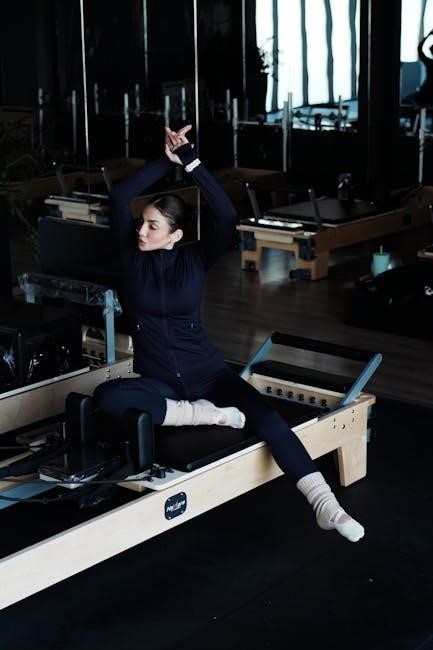
PDF guides designed for prenatal Pilates emphasize exercises performed in safe positions – often side-lying or on an incline – to avoid compressing the baby. They also focus on strengthening the back and pelvic floor muscles, which are crucial for supporting the spine and preparing for labor.
It’s vital to choose a PDF created by a qualified Pilates instructor experienced in prenatal fitness. These resources will clearly indicate modifications for each trimester and highlight exercises to avoid. Consistent, gentle Pilates, guided by a suitable PDF, can help alleviate pregnancy discomforts, improve circulation, and enhance overall physical and emotional well-being.
Creating Your Own Pilates Workout Plan
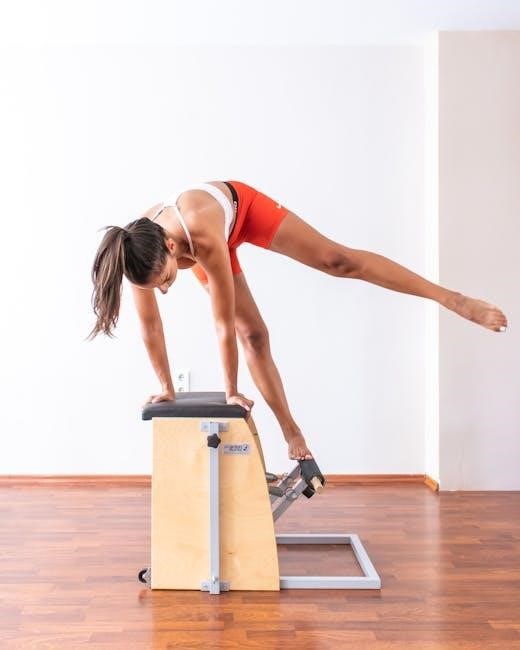
Pilates PDF resources offer exercise ideas, but tailoring a plan to your needs is key. Consider your fitness level, goals, and available time for optimal results.
Setting Realistic Goals
Pilates, guided by PDF workout plans, thrives on progressive overload. Begin by defining achievable short-term goals, such as mastering five foundational exercises within a week. Avoid comparing your journey to others; Pilates is deeply personal.
Instead of aiming for immediate transformation, focus on consistency. A realistic goal might be completing three 20-minute Pilates sessions per week, utilizing a beginner PDF. Gradually increase duration or complexity as strength and flexibility improve.
Break down larger objectives – like improved posture or core strength – into smaller, manageable steps. For example, aim to hold a plank for 30 seconds, then 45, then 60. Documenting progress, perhaps with before-and-after photos or noting how exercises feel, provides motivation. Remember, a sustainable Pilates practice is built on realistic expectations and celebrating small victories found within your chosen PDF guide.
Workout Frequency and Duration
When utilizing a Pilates workout plan PDF, consistency is paramount. For beginners, 2-3 sessions per week, lasting 20-30 minutes, are ideal. This allows muscles to adapt and minimizes the risk of injury. Intermediate practitioners can increase frequency to 3-4 sessions, extending duration to 45-60 minutes.
Listen to your body; rest days are crucial for recovery and preventing overtraining. A PDF might suggest specific rest protocols, but prioritize your individual needs. Shorter, focused sessions are often more effective than infrequent, lengthy workouts.
Consider incorporating “active recovery” – light movement like walking or stretching – on rest days. As you progress through your PDF plan, gradually increase intensity and duration. Remember, quality over quantity; maintaining proper form throughout each exercise is more important than completing a high volume of repetitions.
Cool-down and Stretching
A crucial, often overlooked component of any Pilates workout plan PDF is the cool-down and stretching phase. Dedicate 5-10 minutes post-workout to gently reduce your heart rate and improve flexibility. This prevents muscle soreness and enhances recovery.
Focus on static stretches, holding each stretch for 20-30 seconds. Target major muscle groups worked during the session – hamstrings, hip flexors, back, and shoulders. Your PDF may include specific cool-down exercises; prioritize those initially.
Deep breathing exercises during stretching further promote relaxation and improve circulation. Avoid bouncing or forcing stretches; aim for a gentle, comfortable stretch. Consistent cool-downs and stretching contribute significantly to long-term progress and injury prevention when following a Pilates routine from a PDF.
Wall Pilates: An Accessible Option
Wall Pilates, detailed in many Pilates workout plan PDFs, offers a modified approach, making exercises accessible for all fitness levels and physical limitations.
Benefits of Wall Pilates
Wall Pilates, often outlined within comprehensive Pilates workout plan PDFs, presents a unique and highly beneficial approach to exercise. The wall serves as a supportive prop, offering assistance with alignment and stability, making it ideal for beginners or individuals with limited mobility.
This support allows for deeper muscle engagement and a greater range of motion, particularly in exercises targeting the core, legs, and glutes. PDF guides frequently highlight how the wall can enhance form, reducing the risk of injury while building strength and flexibility.
Furthermore, Wall Pilates is incredibly accessible, requiring minimal equipment and space – perfect for home workouts. Many Pilates plan PDFs demonstrate how to modify traditional mat exercises using the wall, increasing or decreasing the challenge as needed. It’s a fantastic option for those seeking a low-impact, yet effective, workout, and a great stepping stone towards more advanced Pilates practices.
Wall Pilates Exercises for Beginners
Pilates workout plan PDFs often dedicate sections to Wall Pilates exercises specifically designed for beginners. Common starting points include Wall Slides, where you maintain back contact while sliding down the wall, strengthening the back and shoulders.
Another foundational exercise is the Wall Roll Down, promoting spinal articulation and core engagement. PDF guides emphasize controlled movements and proper form. Wall Sit variations, holding a seated position against the wall, build leg strength and endurance.
Beginner Pilates plans also incorporate Wall Angels, improving posture and shoulder mobility. These exercises, detailed in PDF formats, focus on building a solid foundation of core stability and body awareness. Remember to consult a PDF guide for correct alignment and modifications to suit your fitness level. Consistent practice, guided by a Pilates plan PDF, will yield noticeable improvements in strength and flexibility.
Integrating Wall Pilates into Your Routine
Many Pilates workout plan PDFs suggest seamlessly incorporating Wall Pilates into existing fitness regimens. Start by dedicating 10-15 minutes, 2-3 times weekly, to wall-based exercises. A PDF might recommend alternating Wall Pilates with mat work for a balanced approach.
Consider using Wall Pilates as a warm-up, activating key muscle groups before more dynamic movements. PDF guides often propose combining Wall Pilates with cardio or strength training for a comprehensive workout.
Progress gradually, increasing repetitions or sets as strength improves, as detailed in your chosen Pilates plan PDF. Listen to your body and modify exercises as needed. PDF resources emphasize consistency; even short, regular sessions yield significant benefits. Utilizing a Pilates workout plan PDF ensures a structured and effective integration of Wall Pilates into your lifestyle, enhancing overall fitness and well-being.